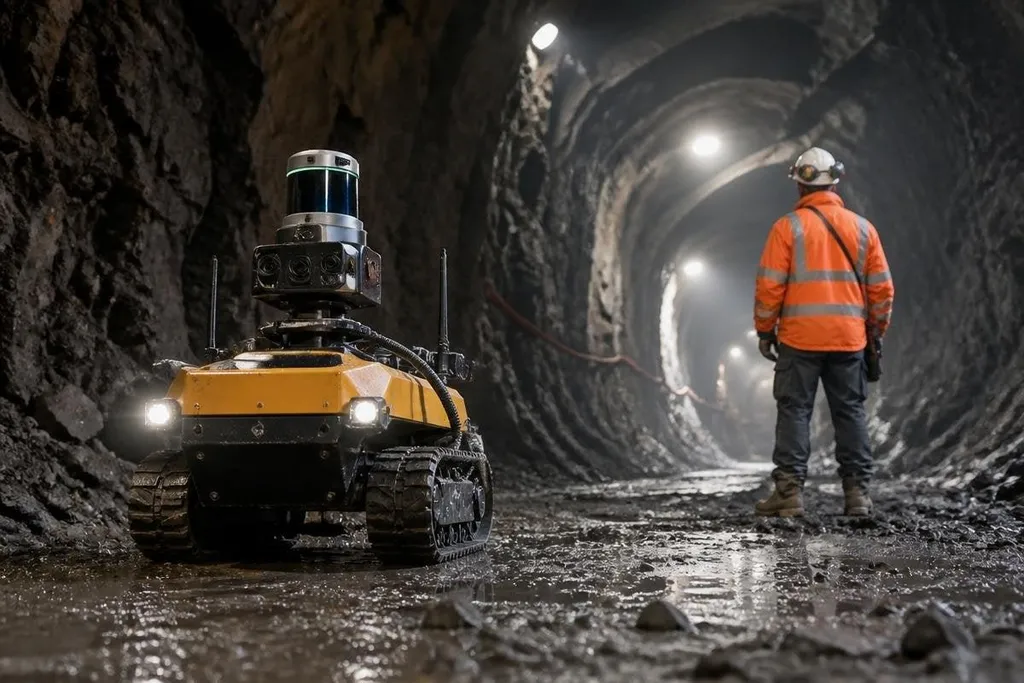
Mining robots can enter areas where falling rock, toxic air, heat, or poor visibility put people at risk. They can inspect tunnels, collect samples, move materials, or operate equipment from a safer location, but the work still needs people, planning, and repair crews.
- Remote operation keeps workers away from some unsafe areas.
- LiDAR, cameras, and gas sensors help robots read mine conditions.
- A failed robot can stop work when spare parts or network access are limited.
Where robots help
A mining robot can carry cameras and sensors into a tunnel before a person enters. LiDAR measures distance with laser pulses, creating a map of nearby walls, machinery, and debris.
Cameras add visual detail, while gas sensors can check for conditions that may harm workers. That information helps a mine team decide whether an area is safe to enter and what equipment it needs. The robot doesn't remove the hazard. It puts a machine between the hazard and the first inspection.
Remote control has a second use. An operator can run a vehicle, drill, or inspection arm from a control room when the work area is unstable or poorly ventilated. The operator still makes decisions, but they don't need to stand beside the machine.
Autonomous systems can also repeat set tasks, such as checking a route or collecting readings. The value comes from repeatable records, since a mine team can compare new sensor data with earlier scans and spot changes in the rock or equipment.
What can go wrong
A robot needs a working route, power, sensors, software, and a way to send data back to its operator. Underground mines can block radio signals, cover sensors with dust, and damage wheels or tracks with water and loose rock.
Loss of communication creates a direct safety problem. A remotely operated machine may stop, continue its last command, or need a person to reach it. The correct response depends on the machine's control system, so a mine must test that failure mode before work begins.
Sensors also have limits. A camera may show a clear image while missing a gas that has no color. LiDAR can map a wall but cannot replace a gas detector or a trained inspection team. Each sensor measures a different part of the problem.
Maintenance adds another concern. Mining equipment faces vibration, dust, water, and heavy loads. A laboratory robot may need different seals, housing, wheels, or cooling before it can run underground.
The cost of moving people out
Remote operation changes the work rather than removing it. A mine still needs people to plan routes, review sensor readings, repair machines, manage batteries, and respond when a robot gets stuck.
Training matters because an operator may control a vehicle from a screen while judging conditions they cannot feel directly. A delayed video feed or blocked camera can turn a small mistake into damaged equipment or a dangerous recovery task.
The financial case also depends on the task. A robot used once for a difficult inspection may be easier to justify than a full autonomous fleet that needs new software, network equipment, workshops, and trained staff. The purchase price is only one part of the calculation.
The cost estimate needs a record from the mine, not a clean lab run. Reports at Robot 24 can put a named robot beside its mine site, task result, and test date. Use those details to set the trial questions in the next section.
A practical buying checklist
Before a mine team approves a robot, check these points:
- Name the task: write down the exact inspection, transport, drilling, or sampling job.
- Map the site: record tunnel width, slope, floor condition, dust, water, heat, and signal coverage.
- Test lost contact: confirm what the robot does when the network drops or a sensor fails.
- Set repair rules: list spare parts, repair tools, service time, and who can approve recovery work.
- Keep human control: define which decisions require an operator and when people may enter the work area.
I'd skip a mining robot whose maker can't show how it handles lost contact, blocked sensors, and recovery after a fault. Those details matter more than a smooth video of the machine driving through an empty tunnel.
The next useful test is a controlled shift in the real mine, with failure logs, repair times, and sensor records kept beside the robot's output. That evidence will show whether the machine reduces exposure to danger or only moves the hard work to a different room.